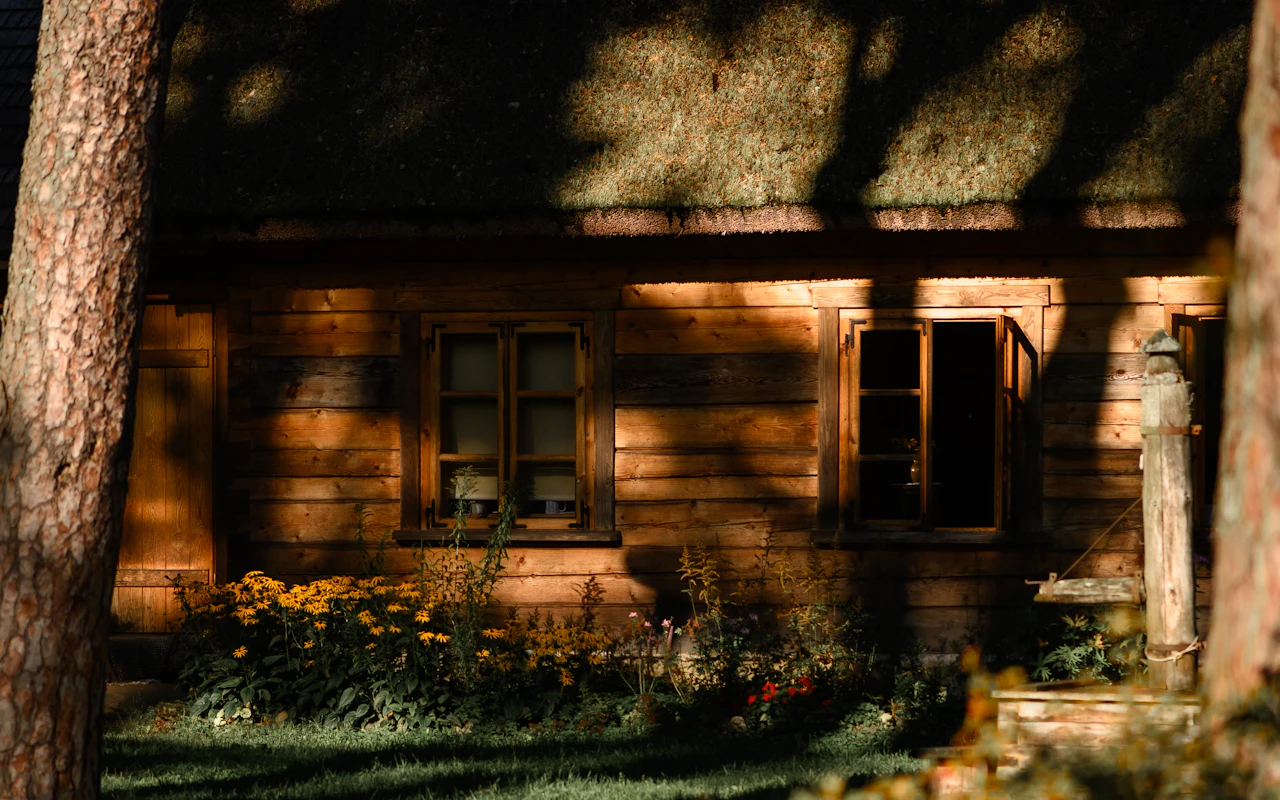
Forest school shelters
Forest school groups need somewhere dry to gather, start the session and keep kit. A permanent shelter turns a patch of woodland or wild ground into a base camp the school can use every week.
What a forest school base needs
Forest school leaders usually ask for the same few things, and they are simpler than a classroom.
- Cover for the group. A roof big enough for everyone to sit under when the weather turns.
- Seating in a circle. Logs, stumps or benches arranged so the group can talk and share.
- Somewhere for kit. A lockable store for tools, tarps and waterproofs saves carrying them out each week.
Many schools start with a tarp and add a timber shelter once the sessions are well established.
| Typical use | Base camp for regular sessions outdoors |
|---|---|
| Construction | Open timber shelter, sometimes with a small store |
| Ground | Usually left natural, with minimal disturbance |
| Seating | A circle of logs, stumps or benches |
| Planning (England) | Check against Class M if it is on the school site |
Working out size and budget? Try the cost and size planner.
Keeping it in keeping
The point of forest school is being in a natural setting, so the shelter should sit lightly. Builders who work in this area tend to suggest ground screws or posts rather than a slab, and rough-sawn timber that weathers in.
Ask the forest school leader to walk the site with the builder. They will know where the group naturally gathers, where the fire circle goes (if there is one) and which trees need protecting.
On the school site or off it
If the woodland is part of the school site in England, a permanent shelter is a new school building and Class M applies: up to 5 m within 10 m of the site boundary and 6 m elsewhere, and nothing within 5 m of a boundary with homes.
If the woodland belongs to someone else, such as a farm, a trust or the council, Class M is not the route. Talk to the landowner and the council before you plan anything permanent.
What Forest School means
The Forest School Association, a registered charity, is the professional body for Forest School in the UK and sets out what it counts as Forest School. In short it is regular sessions in a natural setting, led by a trained practitioner, rather than a one-off trip. Our post on what Forest School is goes into more detail.
Ready to get a builder's view of your site?
Get a quoteSetting up a base camp
Walk the site
Leader and builder together, looking at trees, ground and where the group gathers.
Agree the brief
Roof size, seating, a store, and how lightly it needs to sit.
Check who owns the land
Class M on the school site; the landowner and council off it.
Build
Often a short job, planned to avoid nesting season disturbance where trees are involved.
Forest school shelters: common questions
Do we need a permanent shelter for forest school?
No. Plenty of groups use tarps. A permanent shelter saves setting up each week and gives a dependable dry spot.
Can it have a fire inside?
Fires and timber roofs need care. Talk to your forest school leader and the builder about where a fire circle should sit in relation to the shelter.
Does it need planning permission?
On the school site in England, check it against Class M. Off the school site, Class M doesn't apply.
Can the woodland stay natural underfoot?
Usually yes. Posts or ground screws mean the ground around the shelter can be left as it is.
Who should we ask about Forest School training?
The Forest School Association is the place to start.
Other ways to teach outside
- Outdoor classroom sheltersA roof on posts, benches underneath, and a class can be outside in the rain.
- Early years outdoor classroomsIn the early years the outdoor area is a classroom in its own right.
- School gazebos for outdoor teachingA gazebo puts everyone in a circle facing in, which is why so many schools use one for stories, discussion and small-group work.
Ask for quotes for your school
We find an outdoor classroom builder who works in your area and give you their name before any of your details go to them. It costs your school nothing.
- You choose. The builder only hears from you once you have said yes.
- Written prices. Ask for the base, drawings and any electrics to be priced line by line.
- No obligation. Getting a price commits the school to nothing. How it works
Thank you, that has reached us.
Here is what happens next.
- We look for an outdoor classroom builder who works in your area and suits the brief.
- We email or phone you with their name. Your details go to them only if you say yes.
- They arrange a site visit and send the school a written quote.