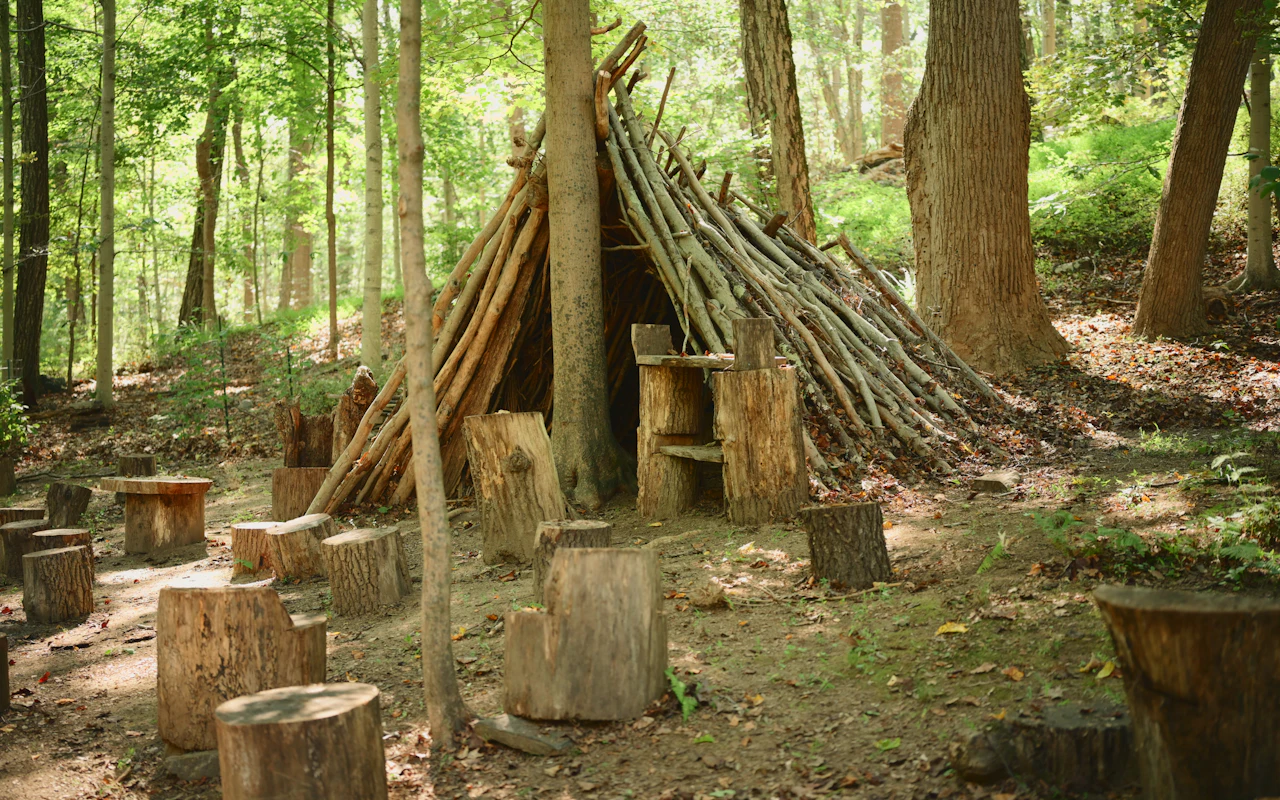
Outdoor classroom shelters
A roof on posts, benches underneath, and a class can be outside in the rain. An open-sided shelter is the simplest outdoor classroom, and for a lot of schools it is the most used.
When a shelter is enough
A shelter suits schools that want more teaching outside without building another room. It works well in these situations.
- Lessons that need the outdoors. Science, art, reading circles and maths trails all work better when the weather is not the deciding factor.
- Wet playtimes and lunch cover. A shelter on the playground earns its keep every day, not just in lesson time.
- A tight budget. With no walls, glazing, insulation or heating, there is far less to pay for than with a building.
If you need a room that stays warm in winter, or somewhere to store kit, look at an enclosed building or a pod instead.
| Typical use | Short lessons, group work, wet playtimes |
|---|---|
| Construction | Timber posts and roof, often with fixed benches |
| Base | Existing playground, ground screws or pads, after a site visit |
| Weather | Keeps rain off; no walls, so no warmth |
| Planning (England) | A new structure, so check it against Class M |
Working out size and budget? Try the cost and size planner.
Choosing the spot
Most of the thinking goes into where the shelter sits, not what it looks like. Can a teacher see it from the classroom door? Is it on the route children already use? Does the ground drain, or does that corner of the field turn to mud in November?
Think about the boundary as well. In England, Class M lets a new school building be up to 5 m within 10 m of the site boundary and 6 m elsewhere, and where the land next door is in residential use nothing can be within 5 m of it. Tucking a shelter into the corner by the neighbours' fence is often exactly where it can't go.
Seating, floor and roof
Fixed benches around three sides make a shelter feel like a classroom straight away. Leave the front open so a teacher can stand there and everyone can see a board or easel.
What goes underfoot matters more than people expect. If the shelter is on grass, the area under it will wear out within a term, so ask the builder to price a hard surface or decking. Ask about guttering too: a roof that drops its water where children queue is a nuisance all winter.
Comparing quotes
Two shelter quotes can look far apart simply because one includes the base, benches and guttering and the other doesn't. Ask each builder to list the structure, the base, the seating and the delivery separately, so you are comparing the same job.
It's also worth asking what the timber is, how it is treated and what upkeep they expect. A shelter that needs re-staining every year costs the site team time.
Ready to get a builder's view of your site?
Get a quoteHow a shelter gets built
Pick the spot
Sight lines, drainage, the route children use and the boundary distances.
Site visit and quote
The builder checks the ground and prices the base, roof, seats and gutters.
Check the rules
Run it past Class M in England, or ask the council in Wales and Scotland.
Install
A small shelter is a short job, best done when the playground is empty.
Outdoor classroom shelters: common questions
Does a shelter need planning permission?
In England it is likely to fall under Class M if it keeps to the height, boundary and footprint limits. Check with the council before you order.
Can we add sides later?
Sometimes, with screens or windbreaks on the weather side. Ask the builder at the start whether the frame is designed to take them.
How many children fit under one?
That depends on the layout and how they sit. Tell the builder the group size you want and ask them to show the seating on a plan.
Shelter or gazebo?
A gazebo is a shelter with a particular shape, usually octagonal, so children sit facing in. See school gazebos.
Will it be safe in high winds?
Ask the builder how the posts are fixed into the ground and what their design allows for. A good builder will explain it without being pushed.
Other ways to teach outside
- School gazebos for outdoor teachingA gazebo puts everyone in a circle facing in, which is why so many schools use one for stories, discussion and small-group work.
- Outdoor classroom buildings in timberAn enclosed outdoor classroom is a proper room in the grounds: walls, doors, glazing and insulation, so a class can use it in February as well as June.
- Forest school sheltersForest school groups need somewhere dry to gather, start the session and keep kit.
Ask for quotes for your school
We find an outdoor classroom builder who works in your area and give you their name before any of your details go to them. It costs your school nothing.
- You choose. The builder only hears from you once you have said yes.
- Written prices. Ask for the base, drawings and any electrics to be priced line by line.
- No obligation. Getting a price commits the school to nothing. How it works
Thank you, that has reached us.
Here is what happens next.
- We look for an outdoor classroom builder who works in your area and suits the brief.
- We email or phone you with their name. Your details go to them only if you say yes.
- They arrange a site visit and send the school a written quote.